SVC
Static VAr
Compensation Systems
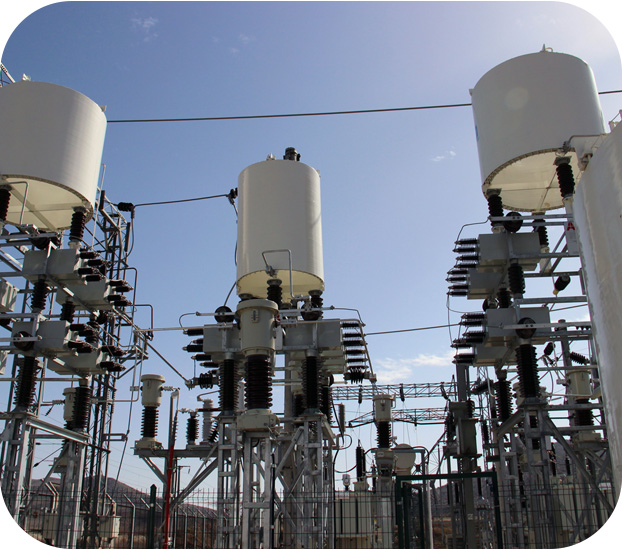
Static VAr Compensation (SVC) is onae of the reactive power compensation and voltage regulation systems which consist of static, or semiconductors, switching elements. Thyristor Controlled Reactor (TCR) and Thyristor Switched Capacitor (TSC) are the most common SVC systems.
Primary Benefits
- Power factor correction
- Voltage regulation improvement
- Flicker mitigation
- Load Balancing
- Power oscillation damping
- Increases transfer capability of transmission systems
- Voltage ride through support
Application Areas
- Transmission and Distribution Systems
- Metal Industry
- Railway Transmission Systems
- Mining Industry
- Cement Industry
- Oil & Gas Industry
- Grid code compliance applications of solar and wind energy systems
Benefits of SVC
- Reduction in active energy losses by improving
reactive power flow and filtering harmonics - Improvement in system stability with load balancing and flicker reduction
- Better utilization of transmission and
distribution systems - Increasing the quality of supply
- Reduction of production cost in iron and steel industry
Fundamentals
How it works?
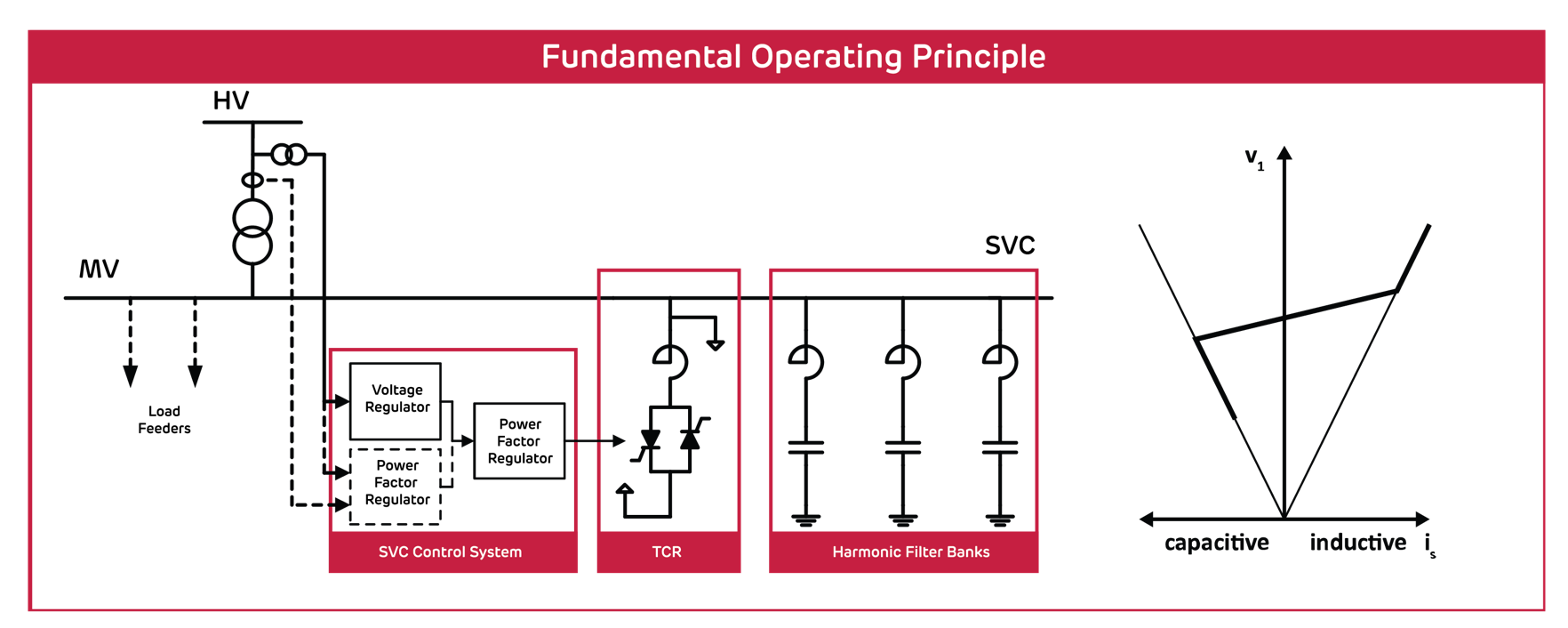
- Thyristor Controlled Reactor (TCR)
- Controllable component of SVC
- Provides inductive reactive power
- Consisting air core reactor and with a bidirectional anti parallel thyristor stack called as thyristor valve
- Act as a variable reactor
- Reactive power output can be controlled from 0 – Qmax continuously
- Fast response time – 10 ms

Main Features of SVC
 Reactive Power
Compensation of fast varying and unbalanced reactive power
Flicker
Reducing flicker by balancing loads and voltage regulation

 Harmonics
Filtering even harmonics as well as ood ones and interharmonics
Unbalance
Balancing the load by injecting unbalanced reactive power as power Steinmetz’s formula

Sample Project
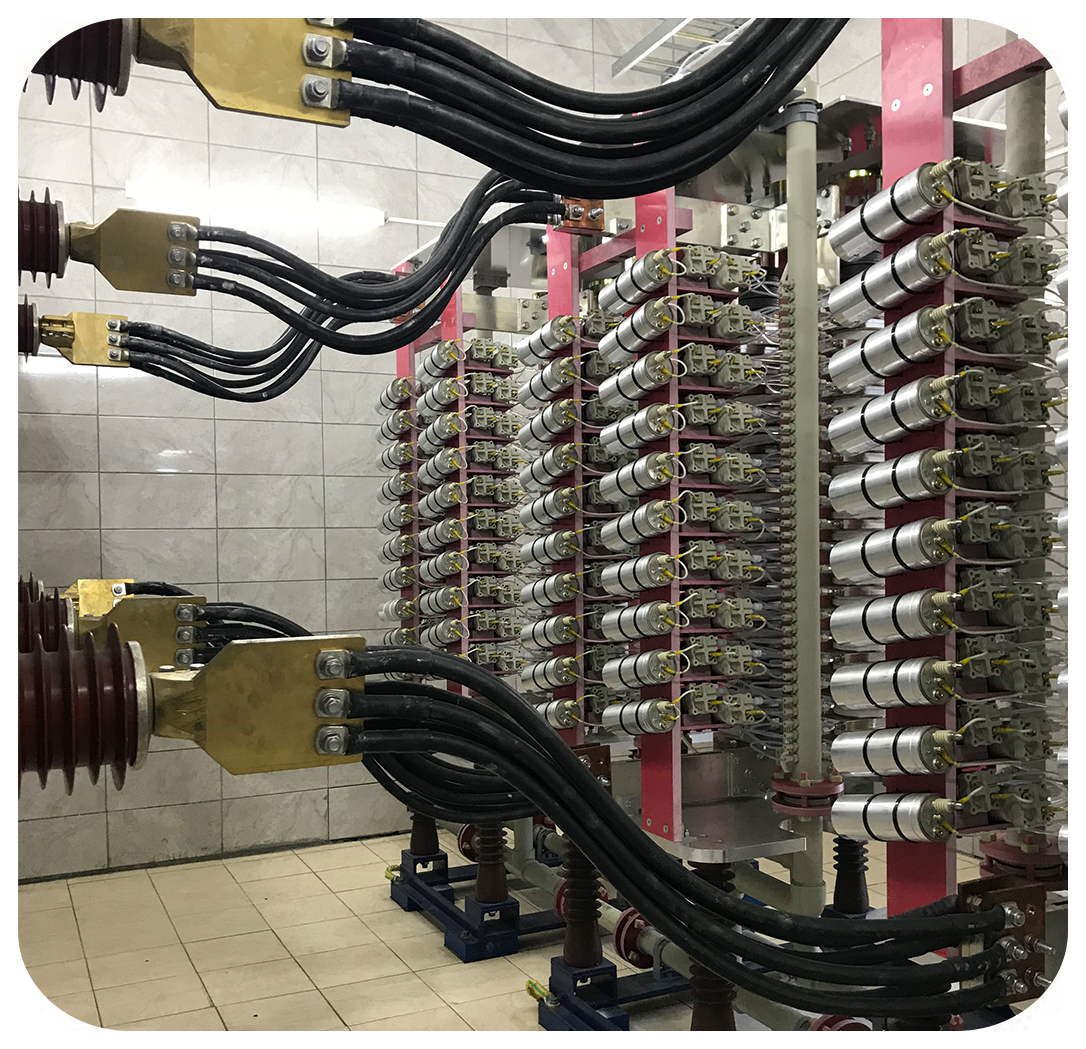
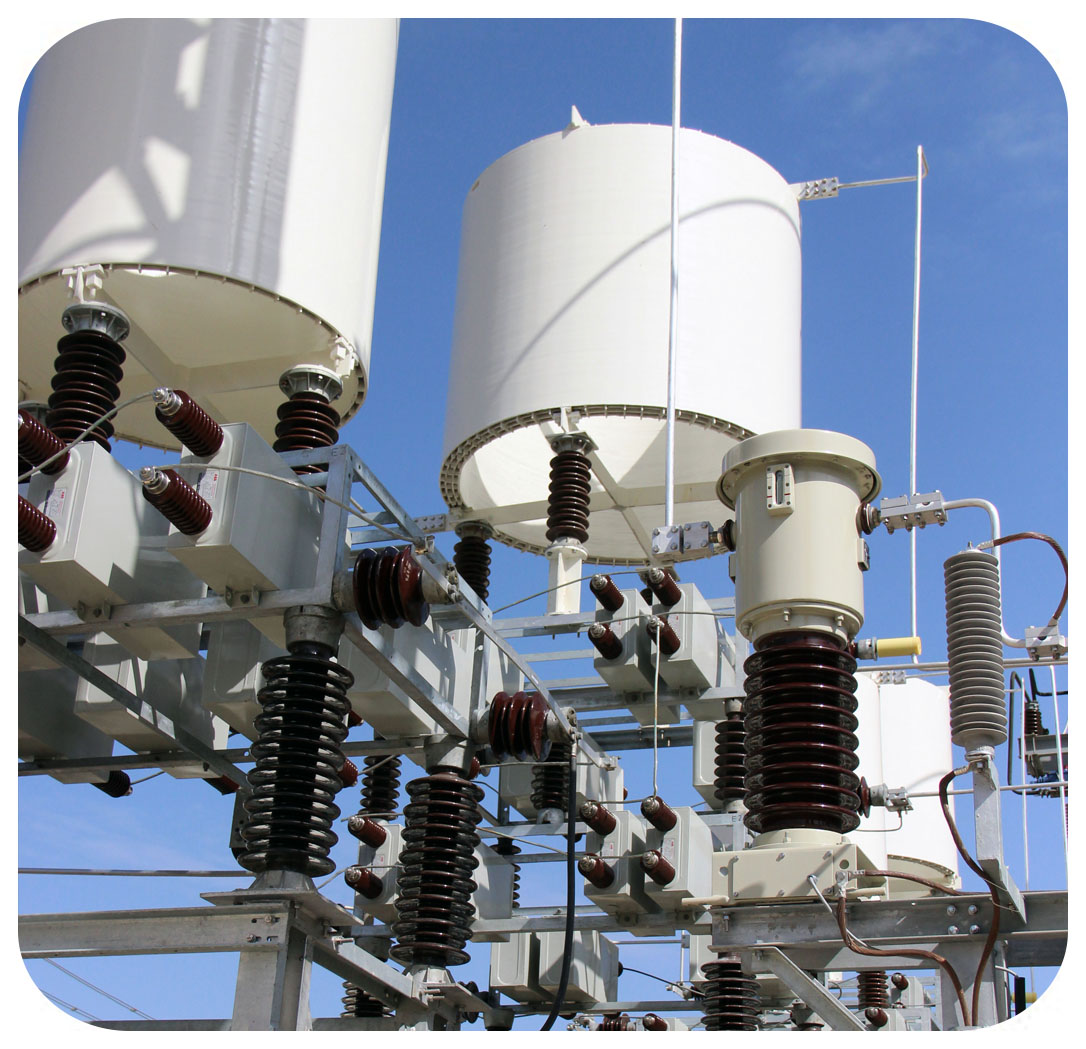
Habaş Iron and Steel Industry
Static VAr Compensation (SVC) system of 310 MVAr at 34.5kV
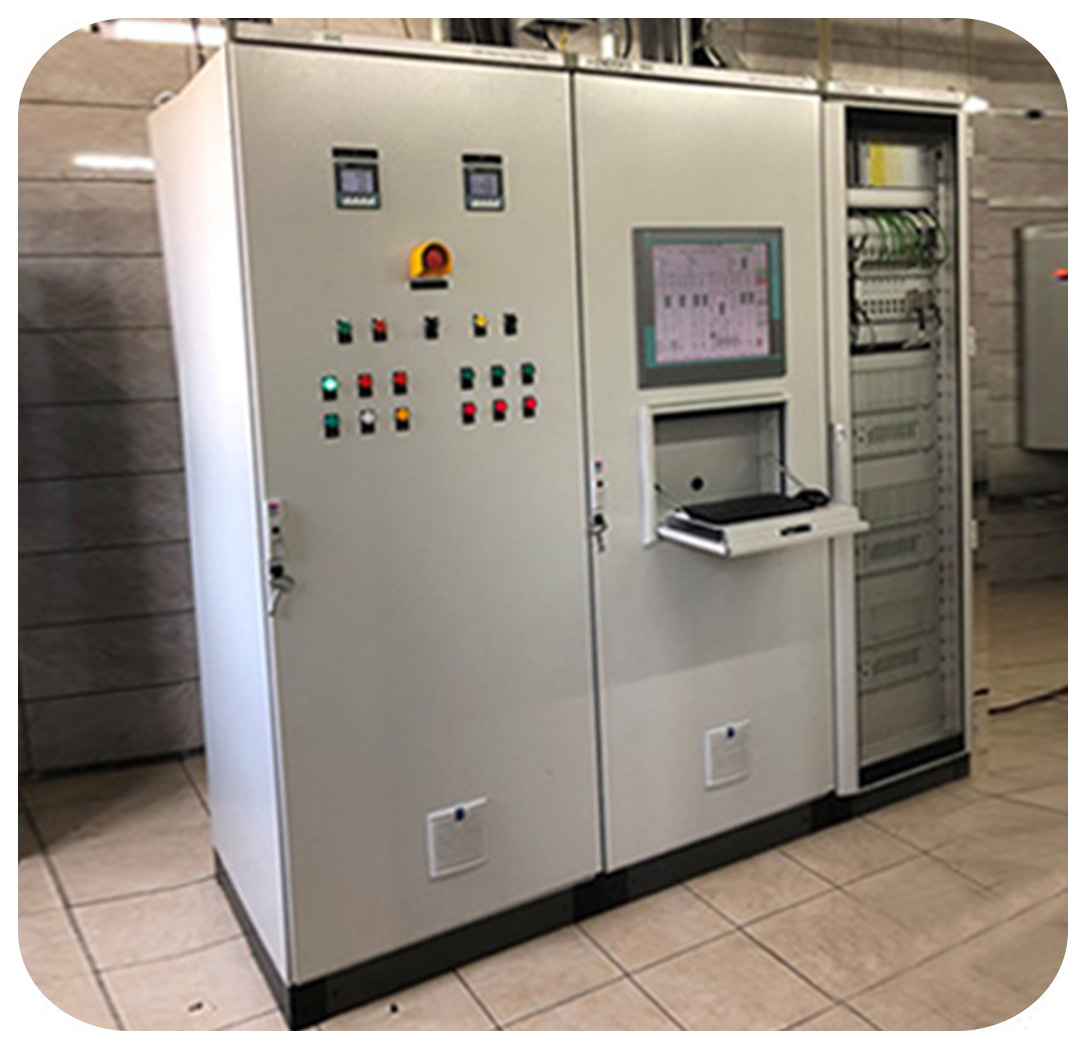
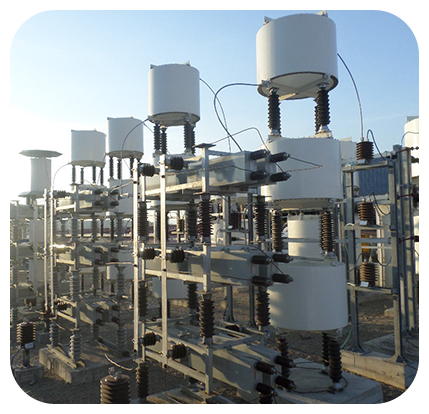
Turkey’e biggest steel plant
300 Mt arc furnace manufacturing steel from scrap
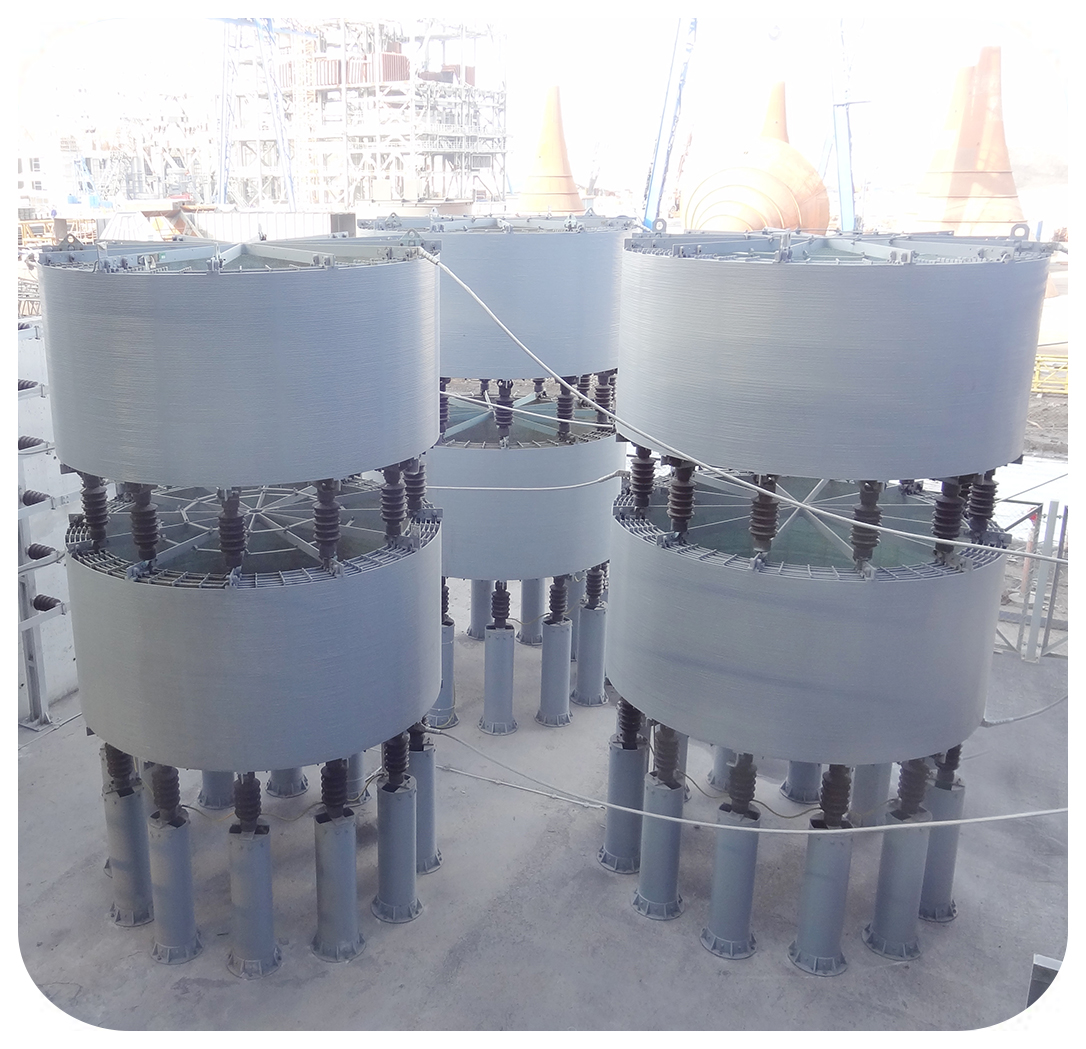
Aliağa, İzmir – Turkey
Second biggest industrial SVC in the world
References












Related Products